AGP Executive Report
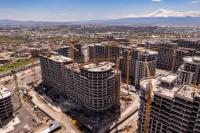
Last update: 2 days agoIn the last 12 hours, Armenia Industry Today coverage is dominated by concrete domestic governance and infrastructure updates, alongside a steady stream of political and geopolitical commentary tied to Armenia’s European pivot. Yerevan Mayor Tigran Avinyan outlined a plan to fully resolve the city’s sewerage problems within 5–6 years (or sooner if accelerated), citing an inventory that points to 93 km of new sewer networks needed in areas without coverage and 73 km requiring major courtyard repairs. The same period also includes a government-backed push for development spending: ACBA Bank, with EBRD support under the EU EFSD+ framework, will allocate €100 million for business development in Armenia (with EBRD bearing half the risk), and the government approved AMD 13 billion for reconstruction of 58 km of roads. On the international business front, Armenia also hosted/featured fintech activity (FINTECH360 in Yerevan) and ongoing cooperation discussions with foreign partners, including UAE engagement on smart cities and digital infrastructure and energy-system modernization talks involving Schneider Electric Romania.
Geopolitics and foreign-policy messaging also feature heavily in the most recent articles. Several items frame Armenia’s direction toward Europe and away from Russia: Latvia’s President Edgars Rinkevics expressed “full solidarity” with Armenia’s European integration path and highlighted the value of increased economic cooperation; Samvel Karapetyan argued that Armenia’s dependence on Russia peaked under the current administration; and Russian Foreign Ministry spokesperson Maria Zakharova criticized Armenian Parliament Speaker Alen Simonyan’s remarks on Belarus as “inhumane envy.” Separately, Hay Dat European Bureau criticized the EU for omitting Artsakh from official summit discussions, signaling that even as Armenia hosts major European events, unresolved regional issues remain politically salient.
A second cluster of last-12-hours coverage links Armenia to broader regional security and international disruption narratives. Armenian Defense Minister Suren Papikyan attended the Defence24 Days conference in Warsaw, positioning Armenia within defense and security industry networks. Meanwhile, international reporting referenced the Strait of Hormuz crisis context—describing nightly explosions affecting Indian seafarers stranded in Iran—and Russia’s warning to evacuate diplomatic missions from Kyiv ahead of potential retaliatory strikes tied to May 9 commemorations. While these are not Armenia-specific industrial developments, they reinforce the environment in which Armenia’s infrastructure, energy, and security decisions are being discussed.
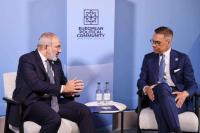
Looking across the wider 7-day window, the continuity is clear: Armenia’s European integration and summit diplomacy are repeatedly tied to concrete cooperation frameworks and investment signals. Multiple articles reference the EU-Armenia summit and EPC (European Political Community) summit in Yerevan, including connectivity and strategic partnership declarations, and France-Armenia defense/tech cooperation. At the same time, domestic and sectoral themes continue to build: tourism infrastructure funding for Yeghegis (including road access, a cable car, and utilities) and further infrastructure planning (including VAT rule changes for jewelry transactions) appear alongside financing deals for entrepreneurship and renewable energy (e.g., Evocabank–Proparco-AFD’s €20 million credit agreement). Overall, the most recent 12 hours lean more toward implementation details (sewerage timelines, financing amounts, conference participation), while the older material provides the political and partnership backdrop for why these initiatives are being emphasized now.
Note: AI-generated summary based on news headlines, with neutral sources weighted more heavily to reduce bias.